

3. Some PCR techniques commonly used in medicine
PCR technique was developed by American biologist Kary Mullis in 1980, making important contributions to the fields of genetics and medicine. Since then, PCR has had many improvements with more modern versions than traditional PCR in terms of technology to improve accuracy, sensitivity and speed of implementation (RT‐PCR, qPCR, and nested PCR). Currently, people often use some of the following techniques:
‐ Single primer PCR (Simplex PCR):
This type of PCR is relatively classical, it only uses 1 pair of specific primers to amplify a single target sequence;
‐ Multiplex PCR:
PCR technique uses many different primer pairs to amplify different target sequences in the same reaction mix. To create a multiplex reaction, the primer pairs used must have the same annealing temperature, they must not anneal together or cross‐anneal. In addition, the sensitivity of multiplex PCR must be equivalent to that of single primer. However, multiplex PCR is often used in cultured cells because the target sequence will be large enough to not require too “strict” sensitivity. This is a method of simultaneously detecting many target DNA sequences in just one reaction well by using many different primer pairs. The technique helps optimize the cost and time of performing the reaction. Currently, people commonly use multiplex PCR in scientific research, clinical diagnosis and forensic science.
‐ Nested PCR or Nested PCR:
The nested PCR technique requires 2 pairs of primers: 1 outer pair and 1 inner pair. In which, the outer primer pair participates in the first PCR to increase the amount of DNA containing the target sequence; while the inner primer pair participates in the second PCR to help detect the target sequence. Usually, when the primer pair specific to the target sequence gives poor sensitivity, people will use the nested PCR technique;
‐ RT‐PCR:
When the target sequence is RNA, the RT‐PCR technique will be used. To do this, before PCR, it is necessary to perform an additional step using the reverse transcriptase enzyme to convert RNA into cDNA. This is the RT stage. In which, 1‐step RT‐PCR only performs RT and PCR in a single test tube, the components for RT and PCR are both contained in the initial mix; 2‐step RT‐PCR incubates RT in a separate test tube. To perform PCR, the resulting DNA will be put into the test tube containing the PCR mix.
RT‐PCR amplifies RNA instead of DNA, so it is often used to detect viruses that have RNA genetic material, such as SARS‐CoV. RT‐PCR uses an enzyme to convert RNA molecules into DNA molecules. Primers are then attached to this DNA molecule; the steps in the process are similar to traditional PCR.
‐ Realtime PCR:
The nature of realtime PCR is also the process of cloning DNA in a test tube, but the advantage is that it can display results at each point in time (real time) and is applied in quantitative tests such as virus quantification. Hepatitis B, hepatitis C. To achieve the above advantages, in addition to the same components as a traditional PCR reaction, the real‐time PCR reaction also adds fluorescent probes, which will be captured by the reader and reported on the display screen. For the traditional PCR method, the number of DNA copies is only determined relatively at the end of the reaction.
Meanwhile, real‐time PCR allows for accurate quantification of the number of DNA copies after each cycle. In the real‐time PCR method, a molecule capable of emitting fluorescence is introduced into the reaction. The more DNA copies are produced, the higher the fluorescence signal. A fluorescent signal monitor is attached to the thermal cycler to determine the number of DNA sequences in real time. Therefore, this method is also called quantitative PCR.
Droplet digital PCR (ddPCR):
Method ddPCR is a PCR technique that uses a water‐oil emulsion droplet system. This system generates thousands of water‐oil emulsion droplets containing DNA inside. The emulsion droplets function similarly to test tubes, providing an environment for DNA replication. This method allows for easy and accurate quantification of target DNA, while reducing the amount of chemicals and samples needed for the reaction.
4.1. Implementation process
To perform PCR testing, all PCR components need to be mixed together, then passed through a series of 3 main reactions in an automatic thermocycler with a 3‐step process:
+ Denaturation (Denaturation 950C): Separate double‐stranded DNA into single‐stranded DNA by heat;
+ Annealing (Annealing 40‐700C): allows the primer to anneal with the DNA template;
+ Elongation (Elongation 720C): New strands are synthesized according to the complementary principle by DNA polymerase
‐ Step 1: Denature or heat the PCR reaction mixture to 940C for 15‐30 seconds, helping the double‐stranded DNA to break in weak hydrogen bonds, so it denatures into single strands.
‐ Step 2: Incubate or cool down to 54‐600C, maintain for about 20‐40 seconds to help the primers anneale with their complementary sequences in the sample DNA.
‐ Step 3: Extend with the required temperature of 72‐800C. This is the stage where the polymerase enzyme sequentially adds bases, extending the DNA sequence. When optimal conditions are reached, there will be more DNA polymerase at 1,000 bp/minute.

Figure 7. General routine PCR procedure
4.2. Note on specimens
The specimen must be collected in the correct place, in the correct area to determine the presence of the desired DNA; Ensure the biological purity of the instruments and equipment used to collect and contain the specimen. If it is not clean, it will destroy the target nucleic acids in the sample or cause the sample to contain substances that inhibit the subsequent amplification reaction. In addition, this equipment is only allowed to be used once.
Although PCR testing is highly accurate in diagnosing many diseases, to achieve that, it must be conducted in a testing environment, with modern medical equipment and experienced staff. All of these factors can only be obtained at a medical facility with a thorough investment in facilities and staff. It cannot be used for patients who are being treated with antibiotics at the site of specimen collection or are in their menstrual cycle with genital specimens, specimens mixed with blood, specimens taken in heparin anticoagulant tubes, specimens preserved in formalin, specimens mixed with cotton fibers. The term PCR refers to a DNA replication reaction based on thermal cycles. The reaction takes place in a small test tube containing a reaction solution (PCR mix). The PCR mix will contain the following components:
A PCR thermal cycle will consist of 3 temperature stages:
1 ‐ Denaturation phase: The temperature will be raised to 94oC, the hydrogen bonds will be broken causing the DNA to denature into a single‐stranded form.
2 ‐ Pairing phase: The temperature is lowered to 55‐65oC, the primers will pair complementary to the 2 ends of the target sequence.
3 ‐ Prolonged phase: The temperature is raised to 72oC, Taq polymerase will use dNTP to extend the 3′ end of the primer and create a complementary strand..
Thus, after each thermal cycle, the number of DNA strands will double. If the thermal cycle is repeated continuously 30 ‐ 40 times, the number of copies will be 230 ~ 240 copies. This huge number of DNA copies when attached with signaling molecules such as ethidium bromide can be seen with the naked eye on the gel electrophoresis under UV light.
5. External contamination of PCR products
The principle of PCR is to amplify DNA, so laboratories that use PCR continuously will sooner or later have PCR products contaminating all equipment, tools, and chemicals. Experimenters will realize this “disaster” when all PCR runs are “positive”, even when using distilled water as a sample. When this happens, the only way is to throw away all chemicals and decontaminate the entire laboratory. However, this will still recur after a period of using PCR.

Figure 8. Some examples of contamination during PCR
|Source: PureBiotech LLC, 2024
PCR product contamination used to be a challenge for molecular biology laboratories. However, scientists have now been able to solve this problem quite effectively, by adding a little dUTP to the dNTP composition. The PCR products created will always contain some U positions instead of T, these U positions can be degraded by the UNG enzyme. The DNA sample collected from the real sample (template) will not contain U, so incubating the PCR mix with the UNG enzyme before PCR will help to cut all the foreign DNA without affecting the template.
6. Application of PCR in Biomedical field
- PCR method helps diagnose some infectious diseases caused by viruses, virus and other parasitic and fungal pathogens. This is especially important in detecting non‐culturable agents or when antibiotics/antiparasitic drugs have been used;
- Detection of drug‐resistant bacterial strains is an important application of PCR, helping to identify drug resistance and guide treatment decisions;
- PCR is used to detect cancer‐related gene expressions, helping to identify “probable causes,” genetic characteristics, and guide treatment decisions;
- PCR is an important tool in genetic research, helping to analyze gene structure, learn about gene expression and study genetics;
- PCR plays an important role in determining HLA gene types, which is important in finding organ and bone marrow donors;
- PCR can be used to determine the presence or absence of microbial toxins, which plays an important role in disease research and diagnosis;
- Realtime PCR EV, EV71, CMV, EBV, Adeno virus, measles, whooping cough, tuberculosis, HSV, RSV, HBV viral load… realtime PCR multiplex in diagnosing respiratory, digestive, encephalitis‐meningitis pathogens.
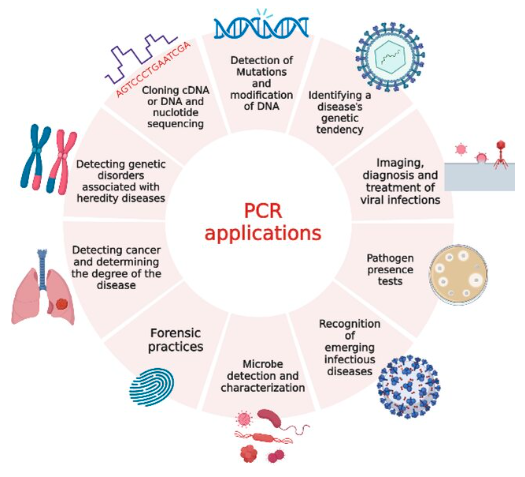
Figure 9. Some applications of PCR in the field of Biomedicine
|Source: esearchgate.net/publication/373834786_Micro‐PCR forpointof care detection&beyond a review microfluidics &nanofluidics
7. Laboratory biosafety
Healthcare workers are fully and properly equipped with personal protective equipment, including clothing, protective shoes to cover the entire body, masks, helmets, and splash‐proof goggles. Healthcare workers also need to use medical gloves when in direct contact with patients or body fluids. Gloves help prevent bacteria and viruses from patients from getting on healthcare workers’ hands;
Protective clothing should only be used in the work area and should not be taken outside to avoid cross‐contamination. After each use, protective clothing should be discarded and disposed of in accordance with medical waste management regulations. These measures should be strictly implemented to ensure maximum safety for both patients and medical staff.
8. Storage, transportation of PCR test samples and calibration
Specimen storage and transportation procedures are important factors for the quality of PCR test results. The sooner the specimen is delivered to the laboratory, the more accurate the results will be. Storage time also depends on the type of sample. If immediate transportation is not possible, the sample should be stored at low temperature (2‐80C) to reduce decomposition.
Before proceeding with calibration, the following steps must be performed: (i) Clean the machine and check its operation according to the manufacturer’s instructions; (ii) Prepare the thermocouples and place the thermocouple heads into the PCR machine, then use insulating material to seal the inlet, the thermocouple heads are fixed and evenly distributed in the machine, and the thermocouples are installed into the measuring machine in the correct positions of the temperature recording channels according to the corresponding channels.
External inspection according to requirements: Review and record information on name, brand, model/type, serial number, temperature indication of measuring device, operating range, manufacturer’s resolution.
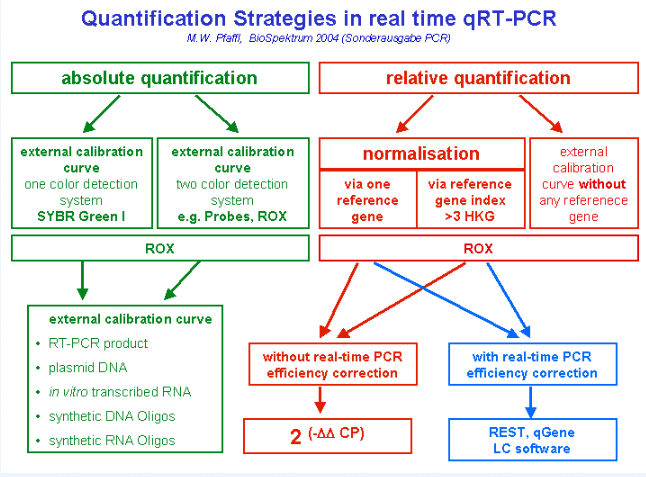
Figure 10. Testing steps to ensure the quality of PCR testing
Source: https://www.gene‐quantification.de/strategy.html
Technical inspection according to the requirements: The temperature indicator operates stably, without sudden changes or fluctuations, the displayed numbers must be clear, not blurred or out of focus. The PCR machine is tested and measured according to the following sequence of contents, methods and requirements: The number of temperature points is divided equally in the temperature range to be calibrated and not less than 2 points; calibrate from the lowest point to the highest point; Set the PCR machine’s thermal bath temperature at the temperature to be calibrated and let the machine operate; After the temperature reaches a stable state (observe the machine’s temperature indicator to see that the temperature value does not change or the temperature fluctuates around a value corresponding to or close to the set temperature value); Record the temperature value Tj of the indicator and the tij values of each position of the standard thermometer.
Record this calibration result many times within a period of about 30 minutes, the number of temperature recordings must be sufficient to determine the maximum, minimum and average temperature of the standard; The process of reading the indicator from the UUT display to the first standard thermometer, then to the nth standard thermometer back to the UUT indicator is one reading. The number of readings at each check point is not less than 3 times; Check the next points in turn.
The UUT’s response delay (Amax) will be calculated at the calibration point with the largest average deviation value in the direction of increasing and decreasing temperature calibration. The measurement test process evaluates the following indicators: Determining the error of the indicator, checking the stability, checking the uniformity, the difference, the response delay at each calibration point and calculating the measurement uncertainty. The PCR machine that meets all the test requirements is affixed with a calibration label and issued a calibration certificate. The recommended calibration cycle is 1 year.
(continute)
Dr. Huynh Hong Quang & Dr. Nguyen Thi Lien Hanh
IMPE Quy Nhon


