

According to the US Centers for Disease Control and Prevention (US.CDC), more than 3 million cases of dengue fever have been reported in the Americas this year, including more than 882 cases in the US, which is the second highest annual incidence in the Americas since 1980.

Dengue fever is spread by Aedes spp. mosquitoes , which thrive in warm , humid conditions. These conditions have become more common in recent years due to record‐breaking temperatures and extreme weather, leading to more dengue cases, according to Nature. Experts say the rise in cases is a “ canary in a coal mine ” for what’s to come as we see changes in rainfall and temperature patterns.
Cases in the United States increased from 814 in 2021 to 2,261 in 2022, and more than 50% of these cases were acquired locally in the United States . Dengue is endemic in California , Florida, Texas, and New York, but cases in the United States have been increasing in recent years and are expected to continue to increase with climate change and urbanization .
This is concerning, said Dr. Krutika Kuppalli, an infectious disease specialist and president of the Americas Society for Global Health Infectious Diseases . The rising number of cases is a signal that public health officials in the United States and around the world need to invest more resources in monitoring and protecting against dengue, Dr. Kuppalli said . She said officials have not been monitoring as much as they should because resources have been allocated to managing COVID ‐19. In addition, Dr. Amesh Adalja, a senior scholar at the Johns Hopkins Center for Health Security, said a lot of people think the United States is immune to mosquito ‐borne diseases , and that’s clearly not true.
How to avoid these annoying mosquitoes that cause dengue fever :
If it seems like mosquitoes are on the attack in Southern California , perhaps there are more dengue cases this year than in previous years , then that’s exactly what’s happening . Here’s what you need to know about dengue fever, including definition , signs, symptoms, treatment, and prevention .
What is dengue fever?
Dengue fever is a viral disease transmitted to humans by Aedes spp . mosquitoes also transmit Zika virus, Chikungunya disease , and other viruses. According to the US. CDC , a person can get dengue fever more than once in their lifetime .
What are the symptoms?
Most people with dengue will have mild symptoms or no symptoms. According to the World Health Organization, if symptoms occur, they usually appear 4-10 days after being bitten by a mosquito and last 2-7 days . People usually get better and recover in 1‐2 weeks. Symptoms include headache, high fever, muscle and joint pain, nausea, vomiting, swollen glands, and rash. Most people with dengue have mild symptoms or no symptoms.
According to the World Health Organization ( WHO) , if symptoms do occur, they typically appear 4‐10 days after a mosquito bite and last 2‐7 days. People usually recover within 1‐2 weeks. Symptoms include headache, high fever, muscle and joint pain, nausea, vomiting, swollen glands, and rash. Mild symptoms can be mistaken for other infectious diseases that can also cause fever, aches, and/or rash. In rare cases, dengue can be severe. “People don’t realize that it can cause serious complications or lead to death,” notes Dr. Kuppalli . Severe dengue is a medical emergency and can get worse quickly.
People who have had dengue fever before are more likely to have severe symptoms. People with severe dengue fever may experience severe abdominal pain, rapid breathing, increased thirst, vomiting blood or bloody stools, pale and cold skin, persistent vomiting , bleeding gums or nose, and weakness. People with severe symptoms should seek immediate medical attention .

What is the treatment?
As Dr. Adalja said, there is no effective antiviral therapy for dengue fever . People are treated with fluids and medications to control symptoms, such as acetaminophen to relieve pain and reduce fever. The US. CDC and WHO recommend avoiding aspirin and ibuprofen because they can increase the risk of bleeding. People are treated with fluids and medications that can control pain and reduce fever, such as acetaminophen. The US. CDC and WHO recommend avoiding aspirin and ibuprofen because they can increase the risk of bleeding .
Is there a vaccine ?
A vaccine has been approved for use in children ages 9‐16 who have had laboratory ‐confirmed dengue fever . These children must also live in areas where dengue is common or persistent . Some of these areas include the U.S. territories of American Samoa, Puerto Rico, and the Virgin Islands .
“It’s really helpful for people who have had a type of dengue fever before,” said Dr. Adalja. The vaccine is not approved for Americans who are simply traveling to areas with high rates of dengue fever.
How to prevent dengue fever ?
According to the US. CDC, if you are traveling or living in an area where dengue fever is common, the best way to prevent getting the disease is to avoid mosquito bites . Measures you can take include wearing protective clothing , applying mosquito repellent containing DEET, Picaridin, or IR3535, and using mosquito nets and window screens.
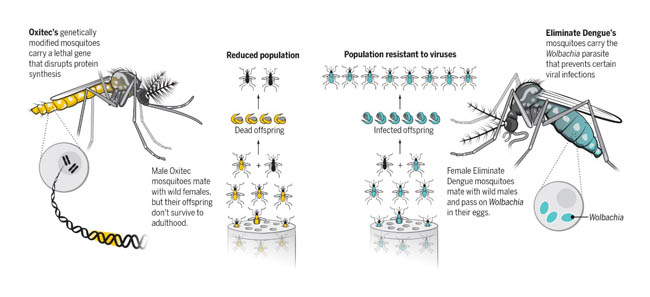
Some areas take measures to control mosquito populations by eliminating places where mosquitoes lay eggs, killing eggs with larvicides, and killing adult mosquitoes with adulticides . Other methods include the use of genetically modified mosquitoes , which have been approved by the Environmental Protection Agency ( EPA ) for use in some counties in the states of Texas and Florida . These mosquitoes have a gene that prevents female mosquitoes from reaching adulthood so they cannot continue to reproduce—this reduces mosquito populations .
Dr. Adiba Matin , an emergency medicine resident at the Mayo Clinic and a member of the ABC News Medical Unit, says genetically modified mosquitoes are an important tool. The EPA says the use of genetically modified mosquitoes poses no danger to humans, animals or the environment.

New discovery opens up ideas for better ways to reduce the spread of deadly viruses from mosquitoes to humans
Researchers from the Johns Hopkins Malaria Research Institute at the Johns Hopkins Bloomberg School of Public Health in the US have made an important discovery about the Aedes aegypti mosquito ‐ a discovery that could one day lead to better ways to reduce the transmission of Dengue , yellow fever , Zika and other harmful and sometimes deadly viruses from mosquitoes to humans.

Mosquito Ae. aegypti mosquitoes survive infection with these viruses and continue to move and feed normally. As a result, infected mosquitoes can transmit their viruses to humans. The researchers found that an Ae. aegypti , called Argonaute 2, plays a key role , through several biological mechanisms, in helping mosquitoes stay healthy and active despite viral infection.
The discovery is a significant advance in understanding mosquito biology. It also suggests a new strategy for disabling Ae . aegypti’s defenses whenever they are infected with certain viruses , which could help kill the mosquitoes and thus reduce the transmission of those viruses from Ae. aegypti to humans. Rather than making mosquitoes more resistant to viruses, the discovery opens up a possible way to make mosquitoes more vulnerable and less tolerant to viral infections, which would reduce their ability to transmit disease ( the study was published online September 18 in the journal Nature Communications ) .

Researchers have long wondered why Ae. aegypti mosquitoes do not get sick when infected with these viruses . Our findings solve this mystery and open the door to a new disease‐control strategy based on this mosquito . However , more research is needed . The study was conducted by Dr. George Dimopoulos, a senior investigator on the study, a professor at the Johns Hopkins Malaria Institute and in the Department of Molecular Microbiology and Immunology at the Bloomberg School, and co‐principal investigator Dr. Shengzhang Dong, a professor at the Bloomberg School .
Mosquito Ae. aegypti mosquitoes transmit “arthropod‐borne” viruses, or “arboviruses,” including Dengue virus , Yellow fever virus, Zika virus, Chikungunya virus , and Mayaro virus. Each year, these pathogens infect millions of people worldwide and kill tens of thousands. There are currently no effective antiviral therapies for any of these viruses. Currently, there is a vaccine to prevent yellow fever virus. A vaccine to prevent dengue fever has been approved by the US Food and Drug Administration (US.FDA) for people aged 6 to 16 years who have previously been infected with dengue fever. Prevention of Ae. aegypti transmitted diseases has focused primarily on the use of insecticides , which have limited effectiveness and have led to resistance to insecticides.
Mosquito Ae. aegypti mosquitoes are efficient vectors of the A rbovirus group , because they can tolerate infection with these viruses without suffering a major impact on their overall reproductive ability—what biologists call “fitness . ” If the mosquitoes’ fitness were impaired, they would likely evolve strong defenses against these pathogens. Instead, they have somehow achieved a balance between survival and allowing the viruses to survive that allows them to carry at least a moderate amount of virus without suffering obvious ill effects.
In the new study, Dr. Dimopoulos and Dr. Dong examined the role of Argonaute 2 (Ago2), a mosquito protein that is part of an important antiviral mechanism called small interfering RNA ( siRNA), which works by recognizing and destroying viral RNA . The researchers found that in Ae. aegypti mosquitoes lacking the Ago2 gene, siRNA production was impaired, arbovirus infections became more severe, and the mosquitoes’ ability to transmit these viruses was greatly reduced—as they became sicker, ate less, and often died within a few days.
The scientists showed that this increased mortality was not only due to a decrease in anti‐viral siRNA, but also due to defects in two other processes that depend on Ago2: DNA repair and a basic waste removal process called “autophagy . ” Mosquitoes lacking the Ago2 protein exposed to arboviruses experience overwhelming infection, severe DNA damage, and a buildup of molecular waste in their dying cells.
In addition to shedding light on an important aspect of Ae. aegypti mosquito biology , this discovery opens up a potential new strategy for controlling Arbovirus disease. This strategy would involve genetically engineering mosquitoes so that infection with Arbovirus would result in the loss of their virus tolerance mechanisms, possibly through inhibition of Ago2. As a result, arbovirus‐carrying Ae. aegypti mosquitoes would die rapidly, while the large population of non‐arboviral Ae. aegypti mosquitoes would remain unaffected.
The biology of mosquito sensitivity and tolerance to viral infection is also an interesting area to explore for other pathogens, said Dr. Dimopoulos. For example, mosquitoes that transmit malaria parasites could perhaps also be genetically modified to become sicker and die from viral infection . Dr. Dimopoulos and his team are currently exploring potential genetic modification approaches in Ae. aegypti to test this new disease control strategy. The study, titled “Aedes aegypti Argonaute 2 controls arboviral infection and host mortality,” was co‐authored by Shengzhang Dong and George Dimopoulos and was supported by funding from the National Institutes of Health (R01AI141532) and Bloomberg Philanthropies.
Refer to the document
https://abc7ny.com/dengue-fever-aedes-aegypti-mosquitoes-genetically-modified-mosquitos/13835011/ Dong, S., & Dimopoulos, G. (2023). Aedes aegypti Argonaute 2 controls arbovirus infection and host mortality. Nature Communications.
Author: MSc. Huynh Thi An Khang & PhD. Nguyen Thai Hoang
Institute of Malariology, Parasitology and Entomology Quy Nhon


