Novel lead structures with both Plasmodium falciparum gametocytocidal and asexual blood stage activity identified from high throughput compound screening
Blocking malaria transmission is an important step in eradicating malaria. In the field, transmission requires the production of sexual stage Plasmodium parasites, called gametocytes, which are not effectively ki…
Malaria Journal 2017 16:147
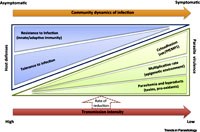
Patterns of inflammatory responses and parasite tolerance vary with malaria transmission intensity
In individuals living in malaria‐endemic regions, parasitaemia thresholds for the onset of clinical symptoms vary with transmission intensity. The mechanisms that mediate this relationship are however, unclear…
Malaria Journal 2017 16:145
Caregivers’ perception of malaria and treatment-seeking behaviour for under five children in Mandura District, West Ethiopia: a cross-sectional study
Early diagnosis and prompt malaria treatment is essential to reduce progression of the illness to severe disease and, therefore, decrease mortality particularly among children under 5 years of age. This study …
Malaria Journal 2017 16:144
Challenges for achieving safe and effective radical cure of Plasmodium vivax: a round table discussion of the APMEN Vivax Working Group
The delivery of safe and effective radical cure for Plasmodium vivax is one of the greatest challenges for achieving malaria elimination from the Asia‐Pacific by 2030. During the annual meeting of the Asia Pacifi…
Malaria Journal 2017 16:141
Characterization of Plasmodium falciparum genes associated with drug resistance in Hodh Elgharbi, a malaria hotspot near Malian–Mauritanian border
A malaria hotspot in the southeastern region of Mauritania, near the Malian border, may hamper malaria control strategies. The objectives were to estimate the prevalence of genetic polymorphisms associated wit…
Malaria Journal 2017 16:140
A novel model fitted to multiple life stages of malaria for assessing efficacy of transmission-blocking interventions
Transmission‐blocking interventions (TBIs) aim to eliminate malaria by reducing transmission of the parasite between the host and the invertebrate vector. TBIs include transmission‐blocking drugs and vaccines …
Malaria Journal 2017 16:137
Genotypic and phenotypic characterization of G6PD deficiency in Bengali adults with severe and uncomplicated malaria
Control of malaria increasingly involves administration of 8‐aminoquinolines, with accompanying risk of haemolysis in individuals with glucose‐6‐phosphate dehydrogenase (G6PD) deficiency. Few data on the preva…
Malaria Journal 2017 16:134
Identification of a novel merozoite surface antigen of Plasmodium vivax, PvMSA180
Although a number of Plasmodium vivax proteins have been identified, few have been investigated as potential vaccine candidates. This study characterized the Plasmodium vivax merozoite surface antigen 180 (PvMSA1…
Malaria Journal 2017 16:133
A novel in vitro model reveals distinctive modulatory roles of Plasmodium falciparum and Plasmodium vivax on naïve cell-mediated immunity
To date, human peripheral blood mononuclear cells (PBMCs) have been used mainly in immune stimulation assays and the interpretation of data can be influenced by the previous immunological history of donors and…
Malaria Journal 2017 16:131
Predictors of the use of interventions to prevent malaria in pregnancy in Cameroon
Malaria in pregnancy is common in sub‐Saharan Africa where it contributes to perinatal morbidity and mortality. Use of insecticide‐treated bed nets and intermittent preventive therapy with sulfadoxine‐pyrimeth…
Malaria Journal 2017 16:132
Analytical sensitivity of current best-in-class malaria rapid diagnostic tests
Rapid diagnostic tests (RDTs) are today the most widely used method for malaria diagnosis and are recommended, alongside microscopy, for the confirmation of suspected cases before the administration of anti‐ma…
Malaria Journal 2017 16:128
Diagnostic challenges and case management of the first imported case of Plasmodium knowlesi in Sri Lanka
Sri Lanka has achieved ‘malaria‐free’ status and is now in the phase of prevention of re‐introduction of malaria. Imported malaria remains a challenge to resurgence of the disease. The diagnostic challenges en…
Malaria Journal 2017 16:126
An assessment of national surveillance systems for malaria elimination in the Asia Pacific
Heads of Government from Asia and the Pacific have committed to a malaria‐free region by 2030. In 2015, the total number of confirmed cases reported to the World Health Organization by 22 Asia Pacific countrie…
Malaria Journal 2017 16:127
Drug resistance mediating Plasmodium falciparum polymorphisms and clinical presentations of parasitaemic children in Uganda
Plasmodium falciparum genetic polymorphisms that mediate altered drug sensitivity may impact upon virulence. In a cross‐sectional study, Ugandan children with infections mutant at pfcr…
Malaria Journal 2017 16:125
El Niño Southern Oscillation as an early warning tool for malaria outbreaks in India
Risks of malaria epidemics in relation to El Niño and Southern Oscillation (ENSO) events have been mapped and studied at global level. In India, where malaria is a major public health problem, no such effort h…
Malaria Journal 2017 16:122
False-negative malaria rapid diagnostic tests in Rwanda: impact of Plasmodium falciparum isolates lacking hrp2 and declining malaria transmission
Rapid diagnostic tests (RDTs) for histidine rich protein 2 (HRP2) are often used to determine whether persons with fever should be treated with anti‐malarials. However, Plasmodium falciparum parasites with a dele…
Malaria Journal 2017 16:123
Age and geographic patterns of Plasmodium falciparum malaria infection in a representative sample of children living in Burkitt lymphoma-endemic areas of northern Uganda
Falciparum malaria is an important risk factor for African Burkitt lymphoma (BL), but few studies have evaluated malaria patterns in healthy BL‐age children in populations where both diseases are endemic. To o…
Malaria Journal 2017 16:124
Tryptophan-rich domains of Plasmodium falciparum SURFIN4.2 and Plasmodium vivax PvSTP2 interact with membrane skeleton of red blood cell
Plasmodium falciparum dramatically alters the morphology and properties of the infected red blood cells (iRBCs). A large group of exported proteins participate in these parasite‐host i…
Malaria Journal 2017 16:121
Erratum to: Pre‐travel malaria chemoprophylaxis counselling in a public travel medicine clinic in São Paulo, Brazil
Malaria Journal 2017 16:120
Clinical and molecular surveillance of drug resistant vivax malaria in Myanmar (2009–2016)
One of the major challenges for control and elimination of malaria is ongoing spread and emergence of drug resistance. While epidemiology and surveillance of the drug resistance in falciparum malaria is being …
Malaria Journal 2017 16:117
Confirmation of Plasmodium falciparum in vitro resistance to monodesethylamodiaquine and chloroquine in Dakar, Senegal, in 2015
In response to increasing resistance to anti‐malarial drugs, Senegal adopted artemisinin‐based combination therapy (ACT) as the first‐line treatment for uncomplicated malaria in 2006. However, resistance of Plasm…
Malaria Journal 2017 16:118
Comparison of the diagnostic performance of microscopic examination with nested polymerase chain reaction for optimum malaria diagnosis in Upper Myanmar
Accurate diagnosis of Plasmodium infection is crucial for prompt malaria treatment and surveillance. Microscopic examination has been widely applied as the gold standard for malaria diagnosis in most part of mala…
Malaria Journal 2017 16:119
Unexpected selections of Plasmodium falciparum polymorphisms in previously treatment-naïve areas after monthly presumptive administration of three different anti-malarial drugs in Liberia 1976–78
To assess the effect on malaria prevalence, village specific monthly administrations of pyrimethamine, chlorproguanil, chloroquine or placebo were given to children in four previously treatment‐naïve Liberian …
Malaria Journal 2017 16:113
TOLLIP gene variant is associated with Plasmodium vivax malaria in the Brazilian Amazon
Toll‐interacting protein is a negative regulator in the TLR signaling cascade, particularly by impeding the TLR2 and, TLR4 pathway. Recently, TOLLIP was shown to regulate human TLR signaling pathways. Two common
Malaria Journal 2017 16:116
Rhesus macaque and mouse models for down-selecting circumsporozoite protein based malaria vaccines differ significantly in immunogenicity and functional outcomes
Non‐human primates, such as the rhesus macaques, are the preferred model for down‐selecting human malaria vaccine formulations, but the rhesus model is expensive and does not allow for direct efficacy testing …
Malaria Journal 2017 16:115
Combining indoor and outdoor methods for controlling malaria vectors: an ecological model of endectocide-treated livestock and insecticidal bed nets
Malaria is spread by mosquitoes that are increasingly recognised to have diverse biting behaviours. How a mosquito in a specific environment responds to differing availability of blood‐host species is largely …
Malaria Journal 2017 16:114
A systematic review of the clinical presentation, treatment and relapse characteristics of human Plasmodium ovale malaria
Despite increased efforts to control and ultimately eradicate human malaria, Plasmodium ovale malaria is for the most part outside the focus of research or public health programmes. Importantly, the understanding…
Malaria Journal 2017 16:112
Resting and feeding preferences of Anopheles stephensi in an urban setting, perennial for malaria
The Indian city of Chennai is endemic for malaria and the known local malaria vector is Anopheles stephensi. Plasmodium vivax is the predominant malaria parasite species, though Plasmodium falciparum is present a…
Malaria Journal 2017 16:111
Burden of malaria in mobile populations in the Greater Accra region, Ghana: a cross- sectional study
The burden of malaria in mobile populations remains poorly documented in sub‐Saharan Africa. This study determined the prevalence of malaria among hawkers and long‐distance truck drivers in the Greater Accra r…
Malaria Journal 2017 16:109
Prevalence and determinants of malaria among children in Zambézia Province, Mozambique
Malaria is the leading cause of death among children in Mozambique. Prevalence and factors associated with malaria are not well studied among children in rural Zambézia Province. Whether prevalence of malaria …
Malaria Journal 2017 16:108
Primaquine-thiazolidinones block malaria transmission and development of the liver exoerythrocytic forms
Primaquine is an anti‐malarial used to prevent Plasmodium vivax relapses and malaria transmission. However, PQ metabolites cause haemolysis in patients deficient in the enzyme glucose‐6‐phosphate dehydrogenase (G…
Malaria Journal 2017 16:110
Preliminary survey on Anopheles species distribution in Botswana shows the presence of Anopheles gambiae and Anopheles funestus complexes
Botswana is one of the four front line malaria elimination countries in Southern Africa, with malaria control activities that include routine vector control. Past and recent studies have shown that Anopheles arab…
Malaria Journal 2017 16:106
A systematic review on malaria sero-epidemiology studies in the Brazilian Amazon: insights into immunological markers for exposure and protection
Considerable success in reducing malaria incidence and mortality has been achieved in Brazil, leading to discussions over the possibility of moving towards elimination. However, more than reporting and countin…
Malaria Journal 2017 16:107
Rapid diagnostic tests failing to detect Plasmodium falciparum infections in Eritrea: an investigation of reported false negative RDT results
Relatively large number of false‐negative malaria rapid diagnostic test (RDT) results for microscopically confirmed Plasmodium falciparum cases were reported from five of the six administrative regions of Eritrea…
Malaria Journal 2017 16:105
Passive case detection of malaria in Ratanakiri Province (Cambodia) to detect villages at higher risk for malaria
Cambodia reduced malaria incidence by more than 75% between 2000 and 2015, a target of the Millennium Development Goal 6. The Cambodian Government aims to eliminate all forms of malaria by 2025. The country’s …
Malaria Journal 2017 16:104
Should chemoprophylaxis be a main strategy for preventing re-introduction of malaria in highly receptive areas? Sri Lanka a case in point
Imported malaria cases continue to be reported in Sri Lanka, which was declared ‘malaria‐free’ by the World Health Organization in September 2016. Chemoprophylaxis, a recommended strategy for malaria preventio…
Malaria Journal 2017 16:102
In vivo efficacy of top five surveyed Ghanaian herbal anti-malarial products
Anti‐malarial herbal preparations (HPs) continue to enjoy high patronage in Ghana despite reports that the artemisinin‐based combination therapy (ACT), the recommended first choice for treatment of uncomplicat…
Malaria Journal 2017 16:103
Evidence of metabolic mechanisms playing a role in multiple insecticides resistance in Anopheles stephensi populations from Afghanistan
Malaria is endemic in most parts of Afghanistan and insecticide‐based vector control measures are central in controlling the disease. Insecticide resistance in the main malaria vector Anopheles stephensi from Afg…
Malaria Journal 2017 16:100
Exo-erythrocytic development of avian malaria and related haemosporidian parasites
Avian malaria parasites (Plasmodium spp.) and related haemosporidians (Haemosporida) are responsible for diseases which can be severe and even lethal in avian hosts. These parasites cause not only blood pathology…
Malaria Journal 2017 16:101
The shape of the iceberg: quantification of submicroscopic Plasmodium falciparum and Plasmodium vivax parasitaemia and gametocytaemia in five low endemic settings in Ethiopia
The widespread presence of low‐density asymptomatic infections with concurrent gametocytes may be a stumbling block for malaria elimination. This study investigated the asymptomatic reservoir of Plasmodium falcip…
Malaria Journal 2017 16:99
Selections, frameshift mutations, and copy number variation detected on the surf 4.1 gene in the western Kenyan Plasmodium falciparum population
Plasmodium falciparum SURFIN4.1 is a putative ligand expressed on the merozoite and likely on the infected red blood cell, whose gene was suggested to be under directional selection in…
Malaria Journal 2017 16:98
Molecular surveillance of artemisinin resistance falciparum malaria among migrant goldmine workers in Myanmar
Artemisinin resistance has been reported in Greater Mekong Sub‐region countries, including Myanmar. After discovery of artemisinin resistance marker (K13), molecular surveillance on artemisinin resistance in e…
Malaria Journal 2017 16:97
Assessment of the utility of a symptom-based algorithm for identifying febrile patients for malaria diagnostic testing in Senegal
Malaria rapid diagnostic tests (RDTs) enable point‐of‐care testing to be nearly as sensitive and specific as reference microscopy. The Senegal National Malaria Control Programme introduced RDTs in 2007, along …
Malaria Journal 2017 16:95
Assessing the impact of differences in malaria transmission intensity on clinical and haematological indices in children with malaria
Malaria control interventions have led to a decline in transmission intensity in many endemic areas, and resulted in elimination in some areas. This decline, however, will lead to delayed acquisition of protec…
Malaria Journal 2017 16:96
Acceptability of insecticide-treated clothing for malaria prevention among migrant rubber tappers in Myanmar: a cluster-randomized non-inferiority crossover trial
Insecticide‐treated clothing (ITC) has long been used for military and outdoor recreational purposes and there is substantial evidence to show that it can protect against arthropod biting. As a complementary v…
Malaria Journal 2017 16:92
The malaria testing and treatment market in Kinshasa, Democratic Republic of the Congo, 2013
The Democratic Republic of Congo (DRC) is one of the two most leading contributors to the global burden of disease due to malaria. This paper describes the malaria testing and treatment market in the nation’s …
Malaria Journal 2017 16:94
Long-term acceptability, durability and bio-efficacy of ZeroVector® durable lining for vector control in Papua New Guinea
This study examined the acceptability, durability and bio‐efficacy of pyrethroid‐impregnated durable lining (DL) over a three‐year period post‐installation in residential homes across Papua New Guinea (PNG).
Malaria Journal 2017 16:93
Bites before and after bedtime can carry a high risk of human malaria infection
Understanding biting distribution of potentially infectious (parous) mosquitoes at various hours of the night would be useful in establishing the likely impact of bed nets on malaria transmission. Bed nets are…
Malaria Journal 2017 16:91
MinorityReport, software for generalized analysis of causal genetic variants
The widespread availability of next generation genome sequencing technologies has enabled a wide range of variant detection applications, especially in cancer and inborn genetic disorders. For model systems an…
Malaria Journal 2017 16:90
Malaria parasite clearance
Following anti‐malarial drug treatment asexual malaria parasite killing and clearance appear to be first order processes. Damaged malaria parasites in circulating erythrocytes are removed from the circulation …
Malaria Journal 2017 16:88
Integrating malaria surveillance with climate data for outbreak detection and forecasting: the EPIDEMIA system
Early indication of an emerging malaria epidemic can provide an opportunity for proactive interventions. Challenges to the identification of nascent malaria epidemics include obtaining recent epidemiological s…
Malaria Journal 2017 16:89
Change in Anopheles richness and composition in response to artificial flooding during the creation of the Jirau hydroelectric dam in Porto Velho, Brazil
Anopheles mosquitoes are the only vectors of human malaria. Anopheles species use standing water as breeding sites. Human activities, like the creation of an artificial lake during the…
Malaria Journal 2017 16:87
Developing global maps of insecticide resistance risk to improve vector control
Significant reductions in malaria transmission have been achieved over the last 15 years with elimination occurring in a small number of countries, however, increasing drug and insecticide resistance threatens…
Malaria Journal 2017 16:86
Geographical distributions of African malaria vector sibling species and evidence for insecticide resistance
Many of the mosquito species responsible for malaria transmission belong to a sibling complex; a taxonomic group of morphologically identical, closely related species. Sibling species often differ in several i…
Malaria Journal 2017 16:85
Changing the policy for intermittent preventive treatment with sulfadoxine–pyrimethamine during pregnancy in Malawi
The growing resistance of Plasmodium falciparum to sulfadoxine‐pyrimethamine (SP) treatment for uncomplicated malaria led to a recommendation by the World Health Organization for the use of artemisinin‐based comb…
Malaria Journal 2017 16:84
Anti-malarial effect of novel chloroquine derivatives as agents for the treatment of malaria
The widespread emergence of anti‐malarial drug resistance has necessitated the discovery of novel anti‐malarial drug candidates. In this study, chloroquine derivatives were evaluated for the improved anti‐mala…
Malaria Journal 2017 16:80
Experimental hut evaluation of a novel long-lasting non-pyrethroid durable wall lining for control of pyrethroid-resistant Anopheles gambiae and Anopheles funestus in Tanzania
A novel, insecticide‐treated, durable wall lining (ITWL), which mimics indoor residual spraying (IRS), has been developed to provide prolonged vector control when fixed to the inner walls of houses. PermaNet® ITW…
Malaria Journal 2017 16:82
Local constraints to access appropriate malaria treatment in the context of parasite resistance in Cambodia: a qualitative study
Despite emerging drug resistance in Cambodia, artemisinin‐based combination therapy (ACT) is still the most efficacious therapy. ACT is available free of charge in the Cambodian public sector and at a subsidiz…
Malaria Journal 2017 16:81
Diversity and distribution of avian malaria and related haemosporidian parasites in captive birds from a Brazilian megalopolis
The role of zoos in conservation programmes has increased significantly in last decades, and the health of captive animals is essential to guarantee success of such programmes. However, zoo birds suffer from p…
Malaria Journal 2017 16:83
A novel Pfs38 protein complex on the surface of Plasmodium falciparum blood-stage merozoites
The Plasmodium genome encodes for a number of 6‐Cys proteins that contain a module of six cysteine residues forming three intramolecular disulphide bonds. These proteins have been well characterized at transmissi…
Malaria Journal 2017 16:79
WHO cone bio-assays of classical and new-generation long-lasting insecticidal nets call for innovative insecticides targeting the knock-down resistance mechanism in Benin
To increase the effectiveness of insecticide‐treated nets (ITN) in areas of high resistance, new long‐lasting insecticidal nets (LLINs) called new‐generation nets have been developed. These nets are treated wi…
Malaria Journal 2017 16:77
Alternative transmission routes in the malaria elimination era: an overview of transfusion-transmitted malaria in the Americas
Transfusion‐transmitted (TT) malaria is an alternative infection route that has gained little attention from authorities, despite representing a life‐threatening condition. There has been no systematic review …
Malaria Journal 2017 16:78
Molecular evidence of Plasmodium vivax infection in Duffy negative symptomatic individuals from Dschang, West Cameroon
Plasmodium vivax infection is known to be rare in West/Central Africa, the most accepted explanation being the lack of expression of erythroid Duffy antigen in the local human populati…
Malaria Journal 2017 16:74
Community engagement and the social context of targeted malaria treatment: a qualitative study in Kayin (Karen) State, Myanmar
The spread of artemisinin‐resistance in Plasmodium falciparum is a threat to current global malaria control initiatives. Targeted malaria treatment (TMT), which combines mass anti‐malarial administration with con…
Malaria Journal 2017 16:75
The effect of elevated temperatures on the life history and insecticide resistance phenotype of the major malaria vector Anopheles arabiensis (Diptera: Culicidae)
Temperature plays a crucial role in the life history of insects. Recent climate change research has highlighted the importance of elevated temperature on malaria vector distribution. This study aims to examine…
Malaria Journal 2017 16:73
Referral of children seeking care at private health facilities in Uganda
In Uganda, referral of sick children seeking care at public health facilities is poor and widely reported. However, studies focusing on the private health sector are scanty. The main objective of this study wa…
Malaria Journal 2017 16:76
Analysing trends and forecasting malaria epidemics in Madagascar using a sentinel surveillance network: a web-based application
The use of a malaria early warning system (MEWS) to trigger prompt public health interventions is a key step in adding value to the epidemiological data routinely collected by sentinel surveillance systems.
Malaria Journal 2017 16:72
Cellulose filtration of blood from malaria patients for improving ex vivo growth of Plasmodium falciparum parasites
Establishing in vitro Plasmodium falciparum culture lines from patient parasite isolates can offer deeper understanding of geographic variations of drug sensitivity and mechanisms of malaria pathogenesis and imm…
Malaria Journal 2017 16:69
Avidity of anti-malarial antibodies inversely related to transmission intensity at three sites in Uganda
People living in malaria endemic areas acquire protection from severe malaria quickly, but protection from clinical disease and control of parasitaemia is acquired only after many years of repeated infections….
Malaria Journal 2017 16:67
New potential Plasmodium brasilianum hosts: tamarin and marmoset monkeys (family Callitrichidae)
Non‐human primates (NHPs) as a source for Plasmodium infections in humans are a challenge for malaria elimination. In Brazil, two species of Plasmodium have been described infecting NHPs, Plasmodium brasilianum a…
Malaria Journal 2017 16:71
Malaria risk in young male travellers but local transmission persists: a case–control study in low transmission Namibia
A key component of malaria elimination campaigns is the identification and targeting of high risk populations. To characterize high risk populations in north central Namibia, a prospective health facility‐bas…
Malaria Journal 2017 16:70
Spectrum-Malaria: a user-friendly projection tool for health impact assessment and strategic planning by malaria control programmes in sub-Saharan Africa
Scale‐up of malaria prevention and treatment needs to continue but national strategies and budget allocations are not always evidence‐based. This article presents a new modelling tool projecting malaria infect…
Malaria Journal 2017 16:68
Pre-travel malaria chemoprophylaxis counselling in a public travel medicine clinic in São Paulo, Brazil
Malaria is one of the most prevalent parasitic diseases in the world and represents a threat to travellers visiting endemic areas. Chemoprophylaxis is the prevention measure used in travel medicine, avoiding c…
Malaria Journal 2017 16:64
The role of grass volatiles on oviposition site selection by Anopheles arabiensis and Anopheles coluzzii
The reproductive success and population dynamics, of Anopheles malaria mosquitoes is strongly influenced by the oviposition site selection of gravid females. Mosquitoes select oviposition sites at different spati…
Malaria Journal 2017 16:65
Malaria from hyperendemicity to elimination in Hekou County on China–Vietnam border: an ecological study
Malaria control and elimination are challenged by diversity and complexity of the determinants on the international border in the Great Mekong Sub‐region. Hekou, a Chinese county on the China‐Vietnam border, w…
Malaria Journal 2017 16:66
An epidemiological study to assess Plasmodium falciparum parasite prevalence and malaria control measures in Burkina Faso and Senegal
Malariometric information is needed to decide how to introduce malaria vaccines and evaluate their impact in sub‐Saharan African countries.
Malaria Journal 2017 16:63
Reduced ex vivo susceptibility of Plasmodium falciparum after oral artemether–lumefantrine treatment in Mali
Artemisinin‐based combination therapy is the recommended first‐line treatment for uncomplicated falciparum malaria worldwide. However, recent studies conducted in Mali showed an increased frequency of recurren…
Malaria Journal 2017 16:59
Increase in imported malaria in the Netherlands in asylum seekers and VFR travellers
Malaria is a notifiable disease in the Netherlands, a non‐endemic country. Imported malaria infections occur regularly among travellers, migrants and visitors. Surveillance data were analysed from 2008 to 2015…
Genetic diversity of Plasmodium vivax metacaspase 1 and Plasmodium vivax multi-drug resistance 1 genes of field isolates from Mauritania, Sudan and Oman
Plasmodium vivax is the second most important human malaria parasite, widely spread across the world. This parasite is associated with important issues in the process toward malaria el…
Malaria Journal 2017 16:61
Efficacy of artemether–lumefantrine, artesunate–amodiaquine, and dihydroartemisinin–piperaquine for treatment of uncomplicated Plasmodium falciparum malaria in Angola, 2015
Recent anti‐malarial resistance monitoring in Angola has shown efficacy of artemether‐lumefantrine (AL) in certain sites approaching the key 90% lower limit of efficacy recommended for artemisinin‐based combin…
Malaria Journal 2017 16:62
Individuals living in a malaria-endemic area of Cameroon do not have an acquired antibody response to Plasmodium falciparum histidine-rich protein 2
Diagnosis of Plasmodium falciparum is often based on detection of histidine‐rich protein 2 (HRP2) in blood. Most HRP2‐based assays have high sensitivity and specificity; however, authors have suggested that antib…
Malaria Journal 2017 16:58
Malaria control and prevention towards elimination: data from an eleven-year surveillance in Shandong Province, China
Shandong Province experienced a declining malaria trend of local‐acquired transmission, but the increasing imported malaria remains a challenge. Therefore, understanding the epidemiological characteristics of …
Malaria Journal 2017 16:55
Adapting the local response for malaria elimination through evaluation of the 1-3-7 system performance in the China–Myanmar border region
Assessing the essential components of ‘1‐3‐7’ strategy along the China‐Myanmar border is critical to identify gaps and challenges to support evidence‐based decision making.
Malaria Journal 2017 16:54
Submicroscopic Plasmodium prevalence in relation to malaria incidence in 20 villages in western Cambodia
Cambodia has seen a marked reduction in the incidence of Plasmodium falciparum over the past decade without a corresponding decline in Plasmodium vivax incidence. It is unknown to what extent local transmission i…
Malaria Journal 2017 16:56
Describing interaction effect between lagged rainfalls on malaria: an epidemiological study in south–west China
When discussing the relationship between meteorological factors and malaria, previous studies mainly focus on the interaction between different climatic factors, while the possible interaction within one parti…
Malaria Journal 2017 16:53
Severe malaria in Europe: an 8-year multi-centre observational study
Malaria remains one of the most serious infections for travellers to tropical countries. Due to the lack of harmonized guidelines a large variety of treatment regimens is used in Europe to treat severe malaria.
Malaria Journal 2017 16:57
Severe Plasmodium vivax infection in Korea
Although severe malaria by Plasmodium vivax has been increasingly reported, there are marked variations in the type and rate of the complications by geographic area. This is possibly because of the presence of co…
Malaria Journal 2017 16:51
Effect of a short course of iron polymaltose on acquisition of malarial parasitaemia in anaemic Indonesian schoolchildren: a randomized trial
Concern exists about the safety of iron supplementation given to individuals in malarious areas. The possible unfavourable impact of iron supplementation on malaria might be less when slow‐release iron compoun…
Malaria Journal 2017 16:50
Working towards consensus on methods used to elicit participant-reported safety data in uncomplicated malaria clinical drug studies: a Delphi technique study
Eliciting adverse event (AE) and non‐study medication data reports from clinical research participants is integral to evaluating drug safety. However, using different methods to question participants yields i…
Malaria Journal 2017 16:52
Health Impact Assessment of Indira Sagar Project: a paramount to studies on Water Development Projects
Very limited studies on Health Impact Assessment (HIA) of Water Development Projects (WDP) in relation to mosquito‐borne diseases have been carried out in India. The current study focuses on using HIA as a too…
Malaria Journal 2017 16:47
Serology reveals heterogeneity of Plasmodium falciparum transmission in northeastern South Africa: implications for malaria elimination
It is widely acknowledged that modifications to existing control interventions are required if South Africa is to achieve malaria elimination. Targeting indoor residual spraying (IRS) to areas where cases have…
Malaria Journal 2017 16:48
Although malaria has been traditionally regarded as less of a problem in urban areas compared to neighbouring rural areas, the risk of malaria infection continues to exist in densely populated, urban areas of …
Malaria Journal 2017 16:49
Artemether-lumefantrine and liver enzyme abnormalities in non-severe Plasmodium falciparum malaria in returned travellers: a retrospective comparative study with quinine-doxycycline in a Portuguese centre
Artemisinin‐based therapy is the current standard treatment for non‐severe malaria due to Plasmodium falciparum. The potential for asymptomatic liver toxicity of this therapy and its implication in clinical prac…
Malaria Journal 2017 16:43
In vitro activity of anti-malarial ozonides against an artemisinin-resistant isolate
Recently published data suggest that artemisinin derivatives and synthetic peroxides, such as the ozonides OZ277 and OZ439, have a similar mode of action. Here the cross‐resistance of OZ277 and OZ439 and four …
Malaria Journal 2017 16:45
Efficacy of text-message reminders on paediatric malaria treatment adherence and their post-treatment return to health facilities in Kenya: a randomized controlled trial
Short Message Service (SMS) reminders have been suggested as a potential intervention for improving adherence to medications and health facility attendance.
Malaria Journal 2017 16:46
Response to fever and utilization of standby emergency treatment (SBET) for malaria in travellers to Southeast Asia: a questionnaire-based cohort study
Guidelines in several European countries recommend standby emergency treatment (SBET) for travellers to regions with low or medium malaria transmission instead of continuous chemoprophylaxis: travellers are ad…
Malaria Journal 2017 16:44
On the cytokine/chemokine network during Plasmodium vivax malaria: new insights to understand the disease
The clinical outcome of malaria depends on the delicate balance between pro‐inflammatory and immunomodulatory cytokine responses triggered during infection. Despite the numerous reports on characterization of …
Malaria Journal 2017 16:42
Optimization of mosquito egg production under mass rearing setting: effects of cage volume, blood meal source and adult population density for the malaria vector, Anopheles arabiensis
Anopheles arabiensis is one of the major malaria vectors that put millions of people in endemic countries at risk. Mass‐rearing of this mosquito is crucial for strategies that use ster…
Malaria Journal 2017 16:41
Recent uptake of intermittent preventive treatment during pregnancy with sulfadoxine–pyrimethamine is associated with increased prevalence of Pfdhfr mutations in Bobo-Dioulasso, Burkina Faso
The impact of sulfadoxine‐pyrimethamine (SP) used as intermittent preventive treatment during pregnancy (IPTp‐SP) on mutant parasite selection has been poorly documented in Burkina Faso. This study sought firs…
Malaria Journal 2017 16:38
A(maize)ing attraction: gravid Anopheles arabiensis are attracted and oviposit in response to maize pollen odours
Maize cultivation contributes to the prevalence of malaria mosquitoes and exacerbates malaria transmission in sub‐Saharan Africa. The pollen from maize serves as an important larval food source for Anopheles mosq…
Malaria Journal 2017 16:39
Health worker adherence to malaria treatment guidelines at outpatient health facilities in southern Malawi following implementation of universal access to diagnostic testing
Appropriate diagnosis and treatment are essential for reducing malaria mortality. A cross‐sectional outpatient health facility (HF) survey was conducted in southern Malawi from January to March 2015 to determi…
Malaria Journal 2017 16:40
Development of Plasmodium falciparum specific naïve, atypical, memory and plasma B cells during infancy and in adults in an endemic area
B‐cells are essential in immunity against malaria, but which sub‐sets of B‐cells specifically recognize Plasmodium falciparum and when they appear is still largely unknown.
Malaria Journal 2017 16:37
Performance of loop-mediated isothermal amplification (LAMP) for the diagnosis of malaria among malaria suspected pregnant women in Northwest Ethiopia
Malaria is a major public health problem and an important cause of maternal and infant morbidity in sub‐Saharan Africa, including Ethiopia. Early and accurate diagnosis of malaria with effective treatment is t…
Malaria Journal 2017 16:34
Heterogeneity of G6PD deficiency prevalence in Mozambique: a school-based cross-sectional survey in three different regions
Glucose‐6‐phosphate dehydrogenase (G6PD) deficiency is an X‐linked hereditary enzymatic abnormality that affects more than 400 million people worldwide. Most deficient individuals do not manifest any symptoms;…
Malaria Journal 2017 16:36
Assessing the availability of LLINs for continuous distribution through routine antenatal care and the Expanded Programme on Immunizations in sub-Saharan Africa
In addition to mass distribution campaigns, the World Health Organization (WHO) recommends the continuous distribution of long‐lasting insecticidal nets (LLINs) to all pregnant women attending antenatal care (…
Malaria Journal 2016 15:255
Cellular engineering of Artemisia annua and Artemisia dubia with the rol ABC genes for enhanced production of potent anti-malarial drug artemisinin
Malaria is causing more than half of a million deaths and 214 million clinical cases annually. Despite tremendous efforts for the control of malaria, the global morbidity and mortality have not been significan…
Malaria Journal 2016 15:252
The importance of accounting for larval detectability in mosquito habitat-association studies
Mosquito habitat‐association studies are an important basis for disease control programmes and/or vector distribution models. However, studies do not explicitly account for incomplete detection during larval p…
Malaria Journal 2016 15:253
Plasmodium falciparum malaria parasitaemia among indigenous Batwa and non-indigenous communities of Kanungu district, Uganda
The indigenous Batwa of southwestern Uganda are among the most highly impoverished populations in Uganda, yet there is negligible research on the prevalence of malaria in this population. Plasmodium falciparum ma…
Malaria Journal 2016 15:254
Assessing the effects of mosquito nets on malaria mortality using a space time model: a case study of Rufiji and Ifakara Health and Demographic Surveillance System sites in rural Tanzania
Although malaria decline has been observed in most sub‐Saharan African countries, the disease still represents a significant public health burden in Tanzania. There are contradictions on the effect of ownershi…
Malaria Journal 2016 15:257
Mortality and pathology in birds due to Plasmodium (Giovannolaia) homocircumflexum infection, with emphasis on the exoerythrocytic development of avian malaria parasites
Species of avian malaria parasites (Plasmodium) are widespread, but their virulence has been insufficiently investigated, particularly in wild birds. During avian malaria, several cycles of tissue merogony occur,…
Malaria Journal 2016 15:256
Development of a Plasmodium berghei transgenic parasite expressing the full-length Plasmodium vivax circumsporozoite VK247 protein for testing vaccine efficacy in a murine model
The approach of using transgenic rodent malaria parasites to assess the immune system’s response to antigenic targets from a human malaria parasite has been shown to be useful for preclinical evaluation of new…
Malaria Journal 2016 15:251
Evaluation of intensified behaviour change communication strategies in an artemisinin resistance setting
In Cambodia, behaviour change communication (BCC) represents an integral component of malaria efforts aimed at fighting artemisinin resistant parasites and achieving elimination. The multi‐pronged BCC interven…
Malaria Journal 2016 15:249
Analysis of asymptomatic and clinical malaria in urban and suburban settings of southwestern Ethiopia in the context of sustaining malaria control and approaching elimination
Malaria intervention in Ethiopia has been strengthened significantly in the past decade. The Ethiopian government recently stratified the country based upon annual parasite incidence into malaria free, low, mo…
Malaria Journal 2016 15:250
Monitoring iCCM referral systems: Bugoye Integrated Community Case Management Initiative (BIMI) in Uganda
In Uganda, over half of under‐five child mortality is attributed to three infectious diseases: malaria, pneumonia and diarrhoea. Integrated community case management (iCCM) trains village health workers (VHWs)…
Malaria Journal 2016 15:247
Characterization of an A-kinase anchoring protein-like suggests an alternative way of PKA anchoring in Plasmodium falciparum
The asexual intra‐erythrocytic multiplication of the malaria parasite Plasmodium falciparum is regulated by various molecular mechanisms. In eukaryotic cells, protein kinases are known to play key roles in cell c…
Malaria Journal 2016 15:248
How important is the angle of tilt in the WHO cone bioassay?
The World Health Organization (WHO) cone bioassay plays an integral role in the evaluation of the efficacy of long‐lasting insecticidal nets as well as insecticides used in indoor residual spraying. The test i…
Malaria Journal 2016 15:243
Pharmacokinetic properties of intramuscular versus oral syrup paracetamol in Plasmodium falciparum malaria
Fever is an inherent symptom of malaria in both adults and children. Paracetamol (acetaminophen) is the recommended antipyretic as it is inexpensive, widely available and has a good safety profile, but patient…
Thanaporn Wattanakul, Pramote Teerapong, Katherine Plewes, Paul N. Newton, Wirongrong Chierakul, Kamolrat Silamut, Kesinee Chotivanich, Ronnatrai Ruengweerayut, Nicholas J. White, Arjen M. Dondorp and Joel Tarning
Malaria Journal 2016 15:244
Risk factors of malaria in children under the age of five years old in Uganda
Malaria is the leading cause of morbidity in Uganda with 90‐95 % of the population at risk and it contributing to approximately 13 % of under‐five mortality. The aim of this study was to investigate the relati…
Danielle Roberts and Glenda Matthews
Malaria Journal 2016 15:246
Heterogeneous malaria transmission in long‐term Afghan refugee populations: a cross‐sectional study in five refugee camps in northern Pakistan
Afghan refugees in northern Pakistan have been resident for over 30 years and current information on malaria in this population is sparse. Understanding malaria risk and distribution in refugee camps is import…
Sobia Wahid, Gillian H. Stresman, Syed Sajid Kamal, Nuno Sepulveda, Immo Kleinschmidt, Teun Bousema and Chris Drakeley
Malaria Journal 2016 15:245
History of malaria treatment as a predictor of subsequent subclinical parasitaemia: a cross‐sectional survey and malaria case records from three villages in Pailin, western Cambodia
Treatment of the sub‐clinical reservoir of malaria, which may maintain transmission, could be an important component of elimination strategies. The reliable detection of asymptomatic infections with low levels…
Thomas J. Peto, Sabine E. Kloprogge, Rupam Tripura, Chea Nguon, Nou Sanann, Sovann Yok, Chhouen Heng, Cholrawee Promnarate, Jeremy Chalk, Ngak Song, Sue J. Lee, Yoel Lubell, Mehul Dhorda, Mallika Imwong, Nicholas J. White, Lorenz von Seidlein…
Malaria Journal 2016 15:240
Clustering and genetic differentiation of the normocyte binding protein (nbpxa) of Plasmodium knowlesi clinical isolates from Peninsular Malaysia and Malaysia Borneo
The zoonotic malaria parasite Plasmodium knowlesi has become an emerging threat to South East Asian countries particular in Malaysia. A recent study from Sarawak (Malaysian Borneo) discovered two distinct normocy…
Md Atique Ahmed, Mun Yik Fong, Yee Ling Lau and Ruhani Yusof
Malaria Journal 2016 15:241
Defining rules of CD8+ T cell expansion against pre‐erythrocytic Plasmodium antigens in sporozoite‐immunized mice
Whole Plasmodium sporozoites serve as both experimental tools and potentially as deployable vaccines in the fight against malaria infection. Live sporozoites infect hepatocytes and induce a diverse repertoire of …
Zachary P. Billman, Arnold Kas, Brad C. Stone and Sean C. Murphy
Malaria Journal 2016 15:238
Determination of the foraging behaviour and blood meal source of malaria vector mosquitoes in Trincomalee District of Sri Lanka using a multiplex real time polymerase chain reaction assay
Studies of host preference patterns in blood‐feeding anopheline mosquitoes are crucial to incriminating malaria vectors. However, little information is available on host preferences of Anopheles mosquitoes in Sri…
Nayana Gunathilaka, Thanuja Denipitiya, Menaka Hapugoda, Wimaladharma Abeyewickreme and Rajitha Wickremasinghe
Malaria Journal 2016 15:242
Increasing outdoor host‐seeking in Anopheles gambiae over 6 years of vector control on Bioko Island
Vector control through indoor residual spraying (IRS) has been employed on Bioko Island, Equatorial Guinea, under the Bioko Island Malaria Control Project (BIMCP) since 2004. This study analyses the change in …
Jacob I. Meyers, Sharmila Pathikonda, Zachary R. Popkin‐Hall, Matthew C. Medeiros, Godwin Fuseini, Abrahan Matias, Guillermo Garcia, Hans J. Overgaard, Vani Kulkarni, Vamsi P. Reddy, Christopher Schwabe, Jo Lines, Immo Kleinschmidt and Michel A. Slotman
Malaria Journal 2016 15:239
Malaria case clinical profiles and Plasmodium falciparum parasite genetic diversity: a cross sectional survey at two sites of different malaria transmission intensities in Rwanda
Malaria remains a public health challenge in sub‐Saharan Africa with Plasmodium falciparum being the principal cause of malaria disease morbidity and mortality. Plasmodium falciparum v…
Fredrick Kateera, Sam L. Nsobya, Stephen Tukwasibwe, Petra F. Mens, Emmanuel Hakizimana, Martin P. Grobusch, Leon Mutesa, Nirbhay Kumar and Michele van Vugt
Malaria Journal 2016 15:237
In vivo efficacy of artemether‐lumefantrine and artesunate‐amodiaquine for uncomplicated Plasmodium falciparum malaria in Malawi, 2014
Malaria causes significant morbidity in Malawi, with an estimated 5 million cases in 2014. Artemether‐lumefantrine (AL) and artesunate‐amodiaquine (ASAQ) are the first‐ and second‐line treatments for uncomplic…
Magdalena Paczkowski, Dyson Mwandama, Daniel Marthey, Madalitso Luka, Georgina Makuta, John Sande, Doreen Ali, Peter Troell, Don P. Mathanga and Julie Gutman
Malaria Journal 2016 15:236
The need for operational research and capacity‐building in support of the Global Technical Strategy for Malaria 2016‐2030
Andrew Ramsay, Piero Olliaro and John C. Reeder
Malaria Journal 2016 15:235
Visualization of house‐entry behaviour of malaria mosquitoes
Malaria mosquitoes often blood feed indoors on human hosts. The mosquitoes predominantly enter houses via open eaves. Host‐seeking is odour‐driven, and finding a host depends on the quality of the odour plume …
Jeroen Spitzen, Teun Koelewijn, W. Richard Mukabana and Willem Takken
Malaria Journal 2016 15:233
Transfusion‐transmitted malaria: donor prevalence of parasitaemia and a survey of healthcare workers knowledge and practices in a district hospital in Ghana
Transfusion‐transmitted malaria (TTM) is a risk of transfusion that has not been well described in malaria endemic regions. The risk of the recipient getting malaria is related to the prevalence of malaria in …
Alex Owusu‐Ofori, Dominic Gadzo and Imelda Bates
Malaria Journal 2016 15:234
Enhanced transmission of malaria parasites to mosquitoes in a murine model of type 2 diabetes
More than half of the world’s population is at risk of malaria and simultaneously, many malaria‐endemic regions are facing dramatic increases in the prevalence of type 2 diabetes. Studies in murine malaria mod…
Nazzy Pakpour, Kong Wai Cheung and Shirley Luckhart
Malaria Journal 2016 15:231
Genomic variation in two gametocyte non‐producing Plasmodium falciparum clonal lines
Transmission of the malaria parasite Plasmodium falciparum from humans to the mosquito vector requires differentiation of a sub‐population of asexual forms replicating within red blood cells into non‐dividing mal…
Susana Campino, Ernest Diez Benavente, Samuel Assefa, Eloise Thompson, Laura G. Drought, Catherine J. Taylor, Zaria Gorvett, Celine K. Carret, Christian Flueck, Al C. Ivens, Dominic P. Kwiatkowski, Pietro Alano, David A. Baker and Taane G. Clark
Malaria Journal 2016 15:229
Assessing the effects of malaria interventions on the geographical distribution of parasitaemia risk in Burkina Faso
Burkina Faso conducted its first nationally representative household malaria survey in 2010/2011. The survey collected among others, information on malaria interventions, treatment choices and malaria parasite…
Eric Diboulo, Ali Sié and Penelope Vounatsou
Malaria Journal 2016 15:228
An ultrasensitive NanoLuc‐based luminescence system for monitoring Plasmodium berghei throughout its life cycle
Bioluminescence imaging is widely used for cell‐based assays and animal imaging studies, both in biomedical research and drug development. Its main advantages include its high‐throughput applicability, afforda…
Mariana De Niz, Rebecca R. Stanway, Rahel Wacker, Derya Keller and Volker T. Heussler
Malaria Journal 2016 15:232
Chronic malaria and hyper‐reactive malarial splenomegaly: a retrospective study on the largest series observed in a non‐endemic country
Chronic malaria is usually defined as a long‐term malarial infection in semi‐immune subjects, usually without fever or other acute symptoms. The untreated infection may evolve to hyper‐reactive malarial spleno…
Zeno Bisoffi, Stefania Leoni, Andrea Angheben, Anna Beltrame, Franklyn Esoka Eseme, Federico Gobbi, Claudia Lodesani, Stefania Marocco and Dora Buonfrate
Malaria Journal 2016 15:230
Pre‐infection administration of asiatic acid retards parasitaemia induction in Plasmodium berghei murine malaria infected Sprague‐Dawley rats
Malaria prevention has remained a critical area in the absence of efficacious vaccines against malaria. Drugs currently used as chemotherapeutics are also used in chemoprophylaxis increasing possible drug resi…
Greanious Alfred Mavondo, Blessing Nkazimulo Mkhwananzi and Musa Vuyisile Mabandla
Malaria Journal 2016 15:226
Determinants of prompt and adequate care among presumed malaria cases in a community in eastern Rwanda: a cross sectional study
In order to understand factors influencing fever/malaria management practices among community‐based individuals, the study evaluated psychosocial, socio‐demographic and environmental determinants of prompt and…
Chantal Marie Ingabire, Fredrick Kateera, Emmanuel Hakizimana, Alexis Rulisa, Claude Muvunyi, Petra Mens, Constantianus J. M. Koenraadt, Leon Mutesa, Michele Van Vugt, Bart Van Den Borne and Jane Alaii
Malaria Journal 2016 15:227