

Recently, the medical facility transferring the department of immunology, allergies, skin disorders, dermatology and parasites has received many cases of patients coming for examination with symptoms when lesions appear on the skin such as erythematous patches, with or without scaly skin, then gradually spread to many other locations on the body, accompanied by itching in many locations on the body, possibly accompanied by secondary infections, especially some clusters of cases including relatives in the same family or roommates.

Introduce
Recently, the medical facility specializing in allergy, skin disorders, dermatology and parasitology has received many cases of patients coming for examination with symptoms when lesions appear on the skin such as erythematous patches, with or without scaly scales, then gradually spread to many other locations on the body, accompanied by itching in many locations on the body, possibly accompanied by secondary infections, especially some clusters of cases including relatives in a family or roommates. After clinical examination, epidemiological investigation of medical history and specialized testing, it was diagnosed that these patients had a fungal skin infection due to contact with pets, dogs, cats, rabbits and they often come into contact, even sleep with these pets.
Such skin fungus in dogs, cats and rabbits, also known as “pet ringworm”, is not life‐threatening but often causes uncomfortable itching and changes in aesthetics. If left untreated or treated incorrectly, the fungal lesions can spread, causing eczema or secondary infection, affecting the patient’s quality of life.
Candida spp. in general and Candida albicans in particular are a group of fungi that are commonly found in the pharynx, digestive tract and external genitalia of many animals and have the potential to cause disease in humans. Factors associated with this fungal infection include immunodeficiency or long‐term use of drugs (immunosuppressants, corticosteroids, anticancer drugs, long‐term antibiotics, etc.), or diseases that affect the integrity of the skin, mucous membranes, and patients with intravenous or urinary catheters. This fungus most commonly infects birds, involving the oral and esophageal mucosa. Superficial infections limited to the intestinal mucosa have been described in pigs and foals. Systemic candidiasis has also been described in calves, sheep and foals due to prolonged treatment with antibiotics or corticosteroids. In cats and dogs, candidiasis caused by Candida spp. is rare but is associated with oral, respiratory, empyema, eye, intestinal and bladder disease. Infection is rare in adult horses. However, Candida spp. are considered to cause arthritis in horses, mastitis, and abortion in cattle. Whether Candida spp. infection in humans can occur through transmission from infected animals remains controversial.
Malassezia spp. is a yeast found on the skin and ears of dogs and cats that can cause ringworm or dermatitis. Some causes that can lead to Malassezia spp. include high humidity and temperature, skin folds such as the nose that are not wiped dry, bathing and drying the fur, and animals living in damp places. Other factors may include a susceptibility to infection, other genetic factors, environmental allergies, and weather that increases sebum secretion, which can irritate the skin and make it susceptible to fungal infections. Malassezia spp. are commonly found in the ear canal, between the toes, anal sacs, vagina, and rectum of dogs and cats. Malassezia spp. is an opportunistic fungal agent and is common during the humid months of summer and fall.
Some features and images of lesions in clinical practice
In clinical practice, both sexes, all ethnicities and races, and all age groups can get this pet‐borne fungal skin disease. If the patient has a history of contact with pets (dogs, cats, rabbits) and suddenly has red, itchy, circular spots on the skin, it may be due to a fungal infection from the pet;
Fungal skin diseases are common, especially in hot and humid tropical climates, which are favorable for fungal growth. Although not life‐threatening, they often cause itching and discomfort. If left untreated or treated incorrectly, fungal lesions can spread, causing eczema or secondary infection, affecting quality of life.
The main route of fungal infection from dogs, cats, and rabbits to humans is direct contact between humans and animals such as kissing, cuddling, petting, or sleeping with them. In addition, sharing or coming into contact with items such as towels, bed sheets, pillows, and combs with infected dogs and cats is also a cause of disease spread;
Signs of fungal skin disease are the appearance of round, oval, or polycyclic erythematous patches on the skin, with a slightly scaly surface or scaly edges, clearly defined, about 4‐5mm in diameter, sometimes up to more than 10mm, scattered on both arms, legs and thighs, sometimes on the chest or scattered in many places on the body, very itchy.

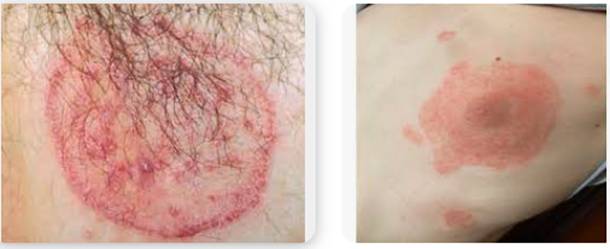

Figure 4. Fungal lesions on humans and cats
Most patients come for examination and treatment when they have skin manifestations such as round, oval or polygonal erythematous patches, slightly scaly surface or with scaly edges, clearly defined, about 4‐5mm in diameter, sometimes up to more than 10mm (rare), scattered on both arms, legs and thighs, sometimes on the chest or other places on the body, itchy and uncomfortable spots. All patients keep dogs, cats, and rabbits. Tests for skin fungus show septate fungal filaments.
Coin ringworm is one of the most serious skin lesions in dogs and cats and can be transmitted to humans. The cause is that the dog’s or cat’s fur is not clean, the fur is damp or has not been cleaned for a long time, which is an opportunity for viruses to develop and become a fungal infection. The phrase “coin” means that the fungal spots on the pet’s skin are circular, the patches of hair fall out and spread like the shape of a coin
The signs of this disease on the body are easily recognized by the appearance of red rashes, with tiny blisters inside those red rashes. Later, these rashes will dry up and form scabs. In particular, these red rashes have clear borders and the patient is very itchy.
When examining the patient, you should also ask about the current pets. When infected with fungus, the cat’s body will have many round or oval red spots. The inside of the red spots is smooth and has clear borders. These wounds are usually dry and slightly scaly. In some cases, you will see tiny blisters around them. The fungus makes the cat feel itchy and uncomfortable, accompanied by hair loss. In humans, the symptoms of fungus in humans when infected are similar. Fungal spots often appear in many different areas of the body (legs, arms, back, neck). This disease not only makes the patient feel self‐conscious about their appearance but also significantly affects the patient’s health.
What causes ringworm in humans?
1. 1. Due to weakened immune system
Under normal conditions, on human skin, cat skin or in the environment such as water, soil, air, there are some types of filamentous fungi. Therefore, both humans and cats can carry the pathogen but do not develop typical clinical symptoms. When the immune system is healthy, white blood cells will find these fungi and destroy them. However, for people with weakened immune systems such as the elderly, children, pregnant women or people with chronic diseases such as HIV/AIDS, diabetes, cancer, rheumatoid arthritis, the possibility of fungal infection is very high. At that time, the number of white blood cells and macrophages will not be enough to destroy all these fungi.
2. Due to fungus entering through open wounds
If a healthy adult comes into contact with fungal spores, there is no high risk of infection unless there is a break in the skin.
The skin is considered the body’s natural protective barrier, preventing ringworm from attacking the body. Direct contact with an infected cat through kissing, hugging, petting, or even sleeping together will cause the fungus to spread to humans and enter the body through open wounds. This is the most common cause of ringworm. Cat scratches can cause this fungal disease. In the process of raising cats, scratches caused by cats are inevitable.
3. Fungal infections in cats in humans due to poor hygiene
The next cause of ringworm is an unclean living environment and poor personal hygiene. Hot weather, sweating, and exposure to dust and smoke are natural. If you do not bathe regularly, sweat that remains on your skin for a long time is a favorable condition for fungus to grow. Not only that, even if you do not have a cat, you still need to keep your house clean to maintain a healthy living environment, limit mold in general and ringworm in particular.
4. Spread by humans and other animals
Ringworm is highly contagious and can survive at room temperature for up to 18 months. Therefore, if not treated thoroughly, the patient is susceptible to relapse. Ringworm can be transmitted by direct contact between people, between people and animals, or by indirect contact with objects containing fungal cells.
Associated factors and risk factors for fungus
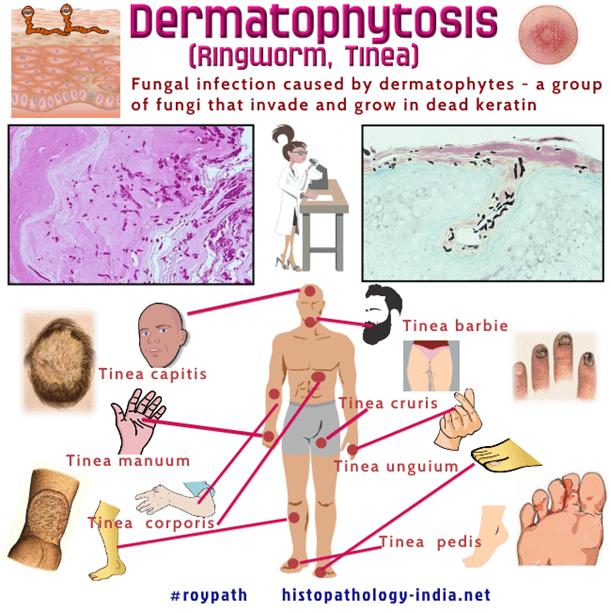
Most fungal infections are dermatophytosis, especially in hot and humid tropical climates that are very favorable for fungal growth. Although the disease is not life‐threatening, it often causes itching and discomfort. If left untreated or treated incorrectly, fungal lesions can spread, causing eczema or bacterial superinfection, affecting the quality of life. Strains of dermatophytosis can be transmitted from soil, animals or people with dermatophytosis. Dermatophytosis is a common infection of the skin, hair, and nails caused by Dermatophyte fungi , a common fungus of the genus Trichophyton and less common than Microsporum or Epidermophyton genera. Treatment of dermatophytosis is successful when both topical and systemic oral routes are applied simultaneously. Terbinafine, Itraconazole and Fluconazole are oral antifungal drugs that are effective against superficial fungi, although it depends on the severity of the infection;
Fungal skin disease is a common disease, especially in hot and humid tropical climates, which are very favorable for fungal growth. Fungal strains can be transmitted from soil, animals or people with fungal skin diseases. Ringworm in humans is a mild and easy‐to‐treat skin disease. However, it has a high risk of recurrence and can spread very quickly. Ringworm is also known by many other names such as “coin” fungus, “cross coin”. It is a fungal infection caused by the Dermatophytes group, very common in hot and humid climates.
Some risk factors for fungal infections are that fungi easily develop and spread when people live together, sleep together, wash the same basin, share clothes, hot and humid climate, sweat a lot, change in skin pH; skin abrasions, dry skin, disorder of the outer protective skin layer, hormonal disorders, systemic or local immune deficiency, long‐term use of antibiotics, use of immunosuppressants, frequent contact with pets such as dogs, cats, rabbits. In the above cases, the cause of filamentous fungal infection is due to close contact with dogs, cats, rabbits…


Diagnose
In terms of epidemiology, the patients said that they had dogs, cats or other pets in their homes and often came into contact with, or even slept with, pets. Through patient information and test results, it was found that these patients had contracted skin fungus due to contact with dogs and cats;
One of the notable points for diagnosis is that when in doubt, the doctor must ask the patient about “the simultaneous condition of the disease in both humans and pets in general and cats in particular”. Sometimes many members of the same family and living area will have ringworm at the same time;
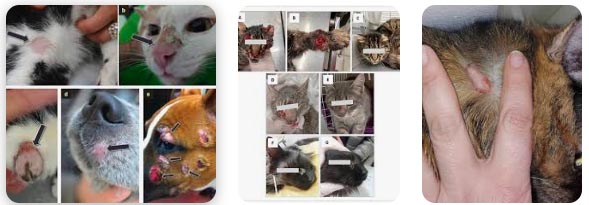
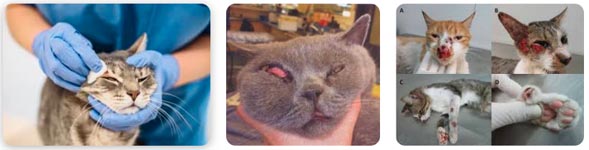
On cats and pets in general: When infected with ringworm, the cat’s body appears many red spots, round or oval. The inside of the red rash is smooth, with clear borders. These ulcers are often dry and scaly. In some cases, small blisters will be seen around it. Fungal spots on cats make cats itchy, uncomfortable, and lose hair. In general, in the family, patients can see that cats with fungus often itch, hair falls out in large patches, dead cells appear, can form scales, layers, have a bad smell, the skin is irritated, red. The hair loss area is round, oval, red or dark due to changes in skin pigmentation. If the cat has severe fungus, it will spread throughout the body and can be transmitted to other individuals upon contact;
On the body: When infected, these lesions often appear in many different locations on the body such as legs, arms, back, neck, etc. This disease not only makes the patient feel self‐conscious about their appearance but also significantly affects the patient’s health. Sometimes in severe cases, patients come to the clinic because on the scalp appear abscesses filled with pus pockets like “swamp”, lying on the inflamed, edematous skin;
Skin‐mucosal scrapings and fresh specimens from the skin and mucosa of suspected lesions can be used to preliminarily identify the pathogen. Fungi are abundant in hyperplastic epithelial tissue and diagnosis can be made by examining scrapings or biopsy samples from skin and mucosal lesions;
Nuôi cấy nấm từ nơi vô trùng hoặc chẩn đoán dựa trên bằng chứng tế bào học từ thương tổn trên da ‐ niêm mạc;C. albicans là các tế bào nấm men nảy chồi hình trứng gram dương (đường kính 3‐7 cm hoặc 4‐5 cm) có thành mỏng hoặc xuất hiện thành chuỗi tạo ra sợi giả khi phôi bào vẫn còn dính sau khi phân chia chồi. Sợi nấm thực sự, đều đặn, dạng sợi cũng có thể được nhìn thấy;
Note that the fungus Malassezia can and will be present in a healthy animal, there may be some doubt as to whether or not it is the yeast causing the skin condition. Therefore, the diagnosis is usually confirmed by clinical response to treatment;
In cats, ringworm occurs in cats of all ages and breeds, but is more common in cats under 6 months old and long‐haired cats. RingwormCauses itching, broken hair or hair loss in patches. The hair loss area is often red, round, oval, ring‐shaped, coin‐shaped with a pink border around it. In severe cases of cats with fungus, spreading all over the body, there may be large patches of hair loss, thickened skin, dermatitis, more severe leading to blood infection, which can be fatal. The disease can spread throughout the cat herd and can be transmitted to humans, especially to young children or newcomers to the area, people who are sensitive to cats, especially when kept together with other cats or spread when the cat is newborn. Cats with funguseasily confused with scabies. For accurate diagnosis, it is best to shave a patch of skin over the infected area and examine it under a microscope for diagnosis;


Some fungal diseases that are common in pets and cats in particular and have the potential to be transmitted to humans include Malassezia pachydermatis, Cutaneous sporotrichosis, Disseminated sporotrichosis, Rhinosporidiosis, Phaeohyphomycosis, Mycetomas, Cryptococcosis, Coccidioidomycosis and Candidiasis. Cats often feel itchy and uncomfortable, their hair falls out in large patches, and many dead cells appear on the skin in scales and layers with a foul odor; Changes in skin color, usually red rashes; Cats often have symptoms of fever, loss of appetite leading to weight loss, respiratory activities will become quite difficult when cats have skin fungus, cats often have diarrhea, nosebleeds or are lazy.
continuted > Part 2
Source
1.Bozena Dworecka‐Kaszaket al., (2018). Animals as a potential source of human fungal infections. Wiad Parazytol, 2008;54(2):101‐8.
2.Alsi Dara Paryuni, Soedarmanto Indarjulianto, Sitarina Widyarini (2020). Dermatophytosis in companion animals: A review. Vet World.2020 Jun; 13(6): 1174‐1181.
3.Karen Moriello (2023). Dermatophytosis in cats and dogs: A practical guide to diagnosis and treatment. https://www.mdpi.com/2309‐608X/4/3/89.
4.Aditya K Gupta, Jennifer E Ryder, Melody Chow, Elizabeth A Cooper (2005). Dermatophytosis: The management of fungal infections. Skinmed, 2005 Sep‐Oct;4(5):305‐10.
5.Verónica L. Burstein, Ignacio Beccacece, Lorena Guasconi, Cristian J. Mena, Laura Cervi, Laura S. Chiapello. Skin immunity to Dermatophytes: From experimental infection models to human disease. Front. Immunol., 02 December 2020, Sec. Microbial Immunology, Volume 11‐2020 | https://doi.org/10.3389/fimmu.2020.605644
Author: Dr. Huynh Hong Quang
(Quy Nhon Institute of Malaria, Parasitology and Entomology)


