

On June 3, 2022, a delegation of experts from VinUni University (Hanoi), Purdue University (USA) and University of Turine (Italy) visited and worked at the Quy Nhon Institute of Malaria, Parasitology and Entomology. The purpose of the trip was to learn about the malaria situation and the status of drug‐resistant malaria parasites in the Central Highlands region.
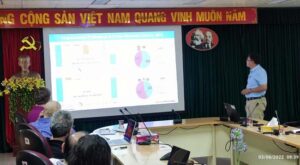
On June 3, 2022, a delegation of experts from VinUni University (Hanoi), Purdue University (USA) and Turine University (Italy) visited and worked at the Quy Nhon Institute of Malaria, Parasitology and Entomology. The purpose of the trip was to learn about the malaria situation and the current status of drug‐resistant malaria parasites in the Central Highlands region as well as to announce some initial research results on phase 2 in clinical trials that are being implemented in some countries in the Mekong Subregion and the potential for multi‐center phase 3 clinical trials with larger sample sizes in malaria‐endemic areas (SRLH) in Vietnam, Laos and Thailand.
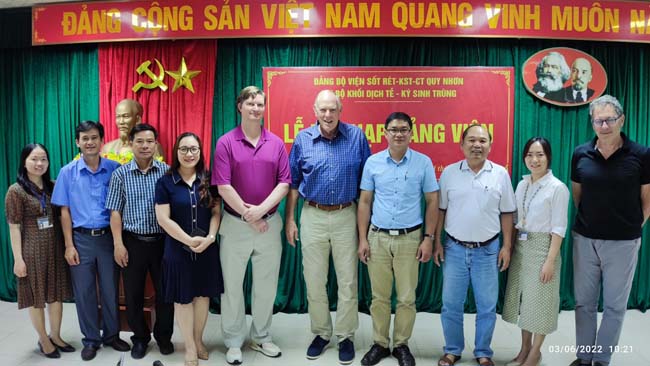
Authorized by the Institute’s leaders, the delegation of experts from universities included Dr. Huynh Hong Quang ‐ Deputy Director of Quy Nhon Malaria‐Parasitology‐Entomology Institute, representatives of Gia Lai Provincial Center for Disease Control and Krong Pa District Medical Center, Gia Lai Province, along with leaders of specialized departments and functional departments of the Institute. On the delegation’s side, there were Prof. Dr. Huynh Dinh Chien, VinUni University (Hanoi), Prof. Dr. Philip S. Low, Center for Drug Discovery, Purdue University (USA), Prof. Dr. Francesco Turrini, University of Turine (Italy) and accompanying experts.
At the meeting, Dr. Huynh Hong Quang, Deputy Director of the Institute, on behalf of the Institute’s leaders, introduced the Institute, the malaria situation and the current status of drug‐resistant malaria in Vietnam in general and the Central Highlands region in particular in the past 3 years. According to the report, the Central Highlands region is a region with complex malaria characteristics compared to the provinces in the North and South. Although the malaria situation in this region is decreasing significantly in terms of cases and deaths, it is still facing many difficulties and challenges: Malaria patients are mainly concentrated in mobile populations (free migration, going to the forest, going to the fields and sleeping on the fields, exchanging across the Vietnam‐Cambodia or Vietnam‐Laos border areas, entering the forest to exploit forest products), comprehensive management of malaria cases at commune and village health stations is not very effective and malaria mosquitoes are less sensitive and resistant to chemicals; In particular, the P. falciparum malaria parasite population resistant to artemisinin and its derivatives or both artemisinin and its accompanying drug (piperaquine phosphate) has spread to many provinces in the region, significantly affecting the results of the P. falciparum malaria elimination goal by 2025 and is a challenge for the Malaria Elimination Roadmap from now until 2030.
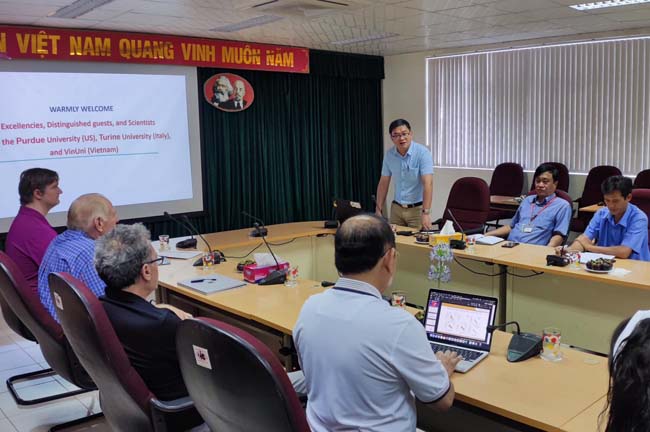

Professors from Purdue University (USA) and University of Turine (Italy) presented the results of the research on a new drug combining Imatinib with Dihydroartemisinin‐Piperaquine phosphate (DHA‐PPQ) with a different mechanism of action, which is the enzyme‐mediated mechanism, against P. falciparum malaria parasites in phase 2 and phase 3. Imatinib is the only Syk inhibitor (an enzyme of red blood cells) approved by the US.FDA and research data through reports show that it is effective, safe, and has low side effects. It acts on red blood cells and inhibits the escape of malaria parasites from the cell. In particular, Imatinib combined with the standard DHA‐PPQ treatment regimen is unlikely to create drug resistance because malaria parasites do not have this enzyme in their genome, so they cannot create resistance mutations (these are the initial results). This new antimalarial therapy was well tolerated, cleared parasites, and reduced fever more rapidly than the standard DHA‐PPQ monotherapy group. This novel drug design opens the door to a new era of drugs that overcome antimicrobial resistance, not just antimalarials.
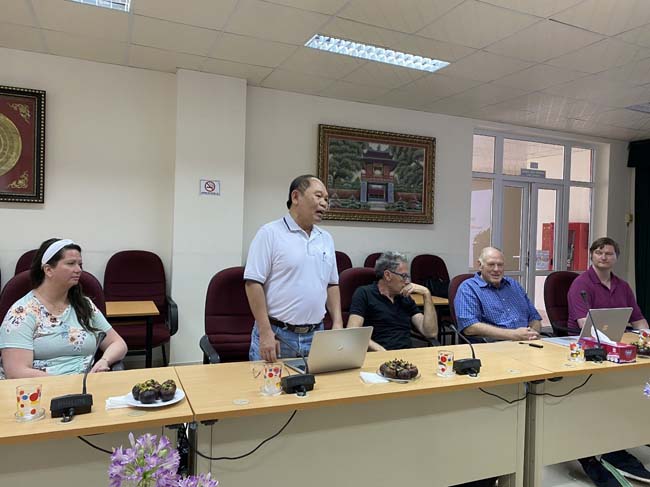
After the presentations, the experts and the Institute discussed and asked questions related to the research and the drug resistance situation as well as the feasibility of conducting the research. The working group discussed with the experts, doctors of the Institute and representatives of the Gia Lai Provincial Center for Disease Control and the Krong Pa District Medical Center, Gia Lai Province about the upcoming clinical trial (TNLS) research outline, about the criteria for selecting patients, exclusion criteria, the process of obtaining consent to participate in the research from patients before recruitment, the drug regimen in the study, dosage, monitoring of adverse events, considering the ability to distinguish the reappearance of KSTSR on days 28 and 35 after taking the drug through clinical values and KSTSR testing, molecular biology), malaria parasite testing techniques at the Institute’s molecular biology laboratory and at the University of Turine (Italy) and the feasibility of choosing a location to implement TNLS research in Gia Lai province.
The two sides agreed to edit and add items to the outline and submit it to the Ministry of Health for approval before implementation. The two sides hope to soon cooperate to implement the clinical trial research project of new antimalarial drugs in the context of increasingly complex drug resistance.
At the same time, the delegation of experts also visited and exchanged expertise with researchers at specialized laboratories on culture of malaria parasites and drug testing. in vitro and molecular biology and research and training cooperation programs for Institute researchers from Oxford University Clinical Research Unit Vietnam OUCRU‐VN, Australian Defence Force Malaria and Infectious Disease Institute ADFMIDI and US Navy Medical Research Unit Number Two‐NAMRU‐2. Experts highly appreciated the Institute’s research results in the past time and the Institute’s leaders’ attention in developing infrastructure and laboratory equipment to serve research.
Given the complex situation of drug‐resistant P. falciparum malaria, it is hoped that the research results will help overcome drug resistance and improve malaria treatment in Gia Lai province and the whole country in the future, contributing to the Roadmap for Malaria Elimination in Vietnam by 2030.
Some pictures of the reception of the delegation:
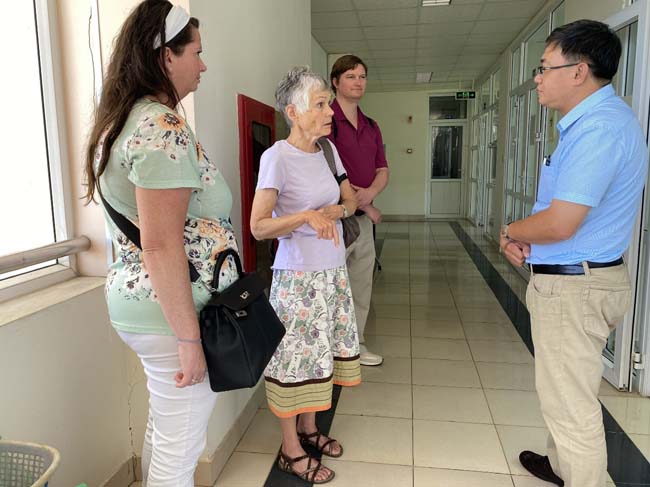
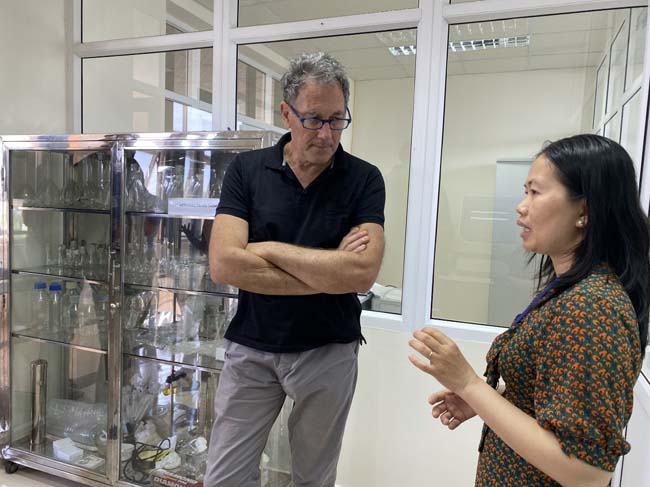
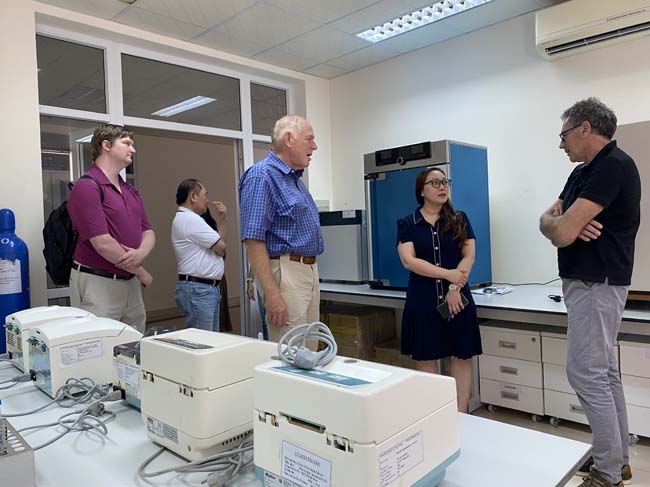
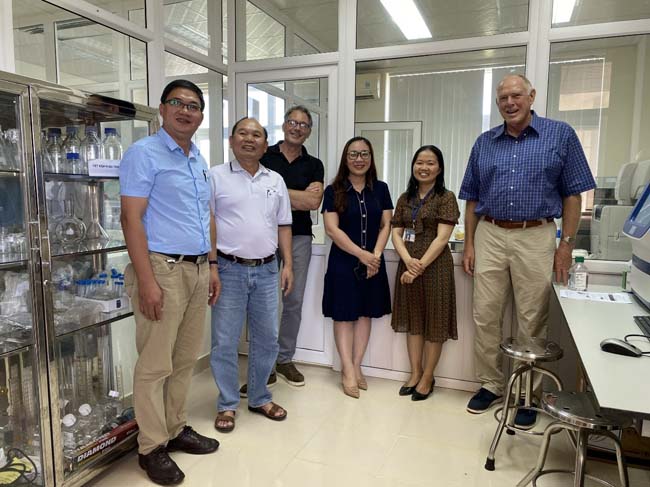
The delegation visited the Institute’s laboratories.
Author: Dr. Huynh Hong Quang, Master Huynh Thi An Khang

